What’s new in Italy
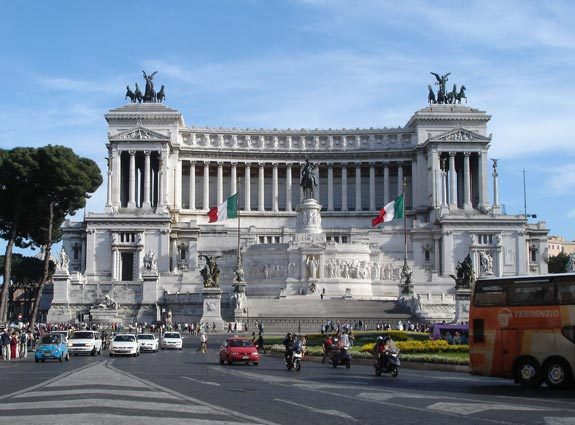
Travelers to Italy need to be smart to avoid needless lines and expenses while enjoying its ever-popular treasures. Major sights in Rome, Florence, Venice and Milan have these changes for 2009.
Travelers to Italy need to be smart to avoid needless lines and expenses while enjoying its ever-popular treasures. Major sights in Rome, Florence, Venice and Milan have these changes for 2009.
While updating my guidebooks for 2009, I found plenty of changes in Britain and Ireland.
• Fortunately, one of my favorite offbeat sights in London — the Bramah Museum of Tea & Coffee (www.teaandcoffeemuseum.co.uk) — will reopen later this year. It had closed following the death of its founder, Edward Bramah. He believed that the tea bag, invented in the 1950s to let Brits brew tea during a TV commercial, spelled the death of a good “cuppa.” Aficionados of tea or coffee will find this small, quirky museum fascinating.
After a 4-year renovation and expansion project costing $16 million, the Musée International de la Parfumerie, or International Perfume Museum (8 place du Cours, F-06130 Grasse, France; http://en.museesdegrasse.com), reopened in Grasse on Oct. 18, 2008. Housed in the former Hugues-Aîné perfumery built in the 19th century, exhibits trace the 4,000-year history of perfumes, soap and cosmetics.
Open 10-5 daily June-August and Wednesday-Sunday October-May. €4 ($6).
Tracing football’s (soccer’s) growth from a game for the elites to a passion for all the 190 million people of Brazil, the Museu do Futebol opened in September 2008 at the Pacaembu Stadium (Praça Charles Miller, Consolçao, São Paulo) in São Paulo, east of the central downtown area.
See sports reel footage of Pelé and Garrincha. Put on 3-D glasses and watch Ronaldinho dribble a soccer ball to a samba beat without letting it touch the ground. Take a penalty kick at a goal and have the speed measured by a radar gun;
In Nara, the first capital of Japan, as of Sept. 6, 2008, international visitors receive free tickets at four museums simply by showing their passports.
A 30-minute train ride from central Kyoto, these include Nara Museum of Art (17th-century Ukiyo-e woodblock prints), Nara Complex of Manyo Culture in Asuka Village (Manyoshu, Japan’s oldest collection of poetry), Nara Museum of Folklore (Machiya-style houses, tools) and Archaeological Institute of Kashihara (items from 1938 excavation of Fujinoki Burial Mound).
The Belgian surrealist painter René Magritte was inspired by the bizarre and absurd. The new Magritte Museum (Place Royale, 1-100 Brussels, Belgium; phone +32 2 508 31 11, www.montdesarts.be) is set to open in the Mont des Arts (Museum Quarter) of Brussels, June 2, 2009. It will hold 200 works — the largest collection of Magritte paintings, plus archival material, letters written by the painter, photographs and drawings. Open 10-5, Tuesday-Sunday. €5.
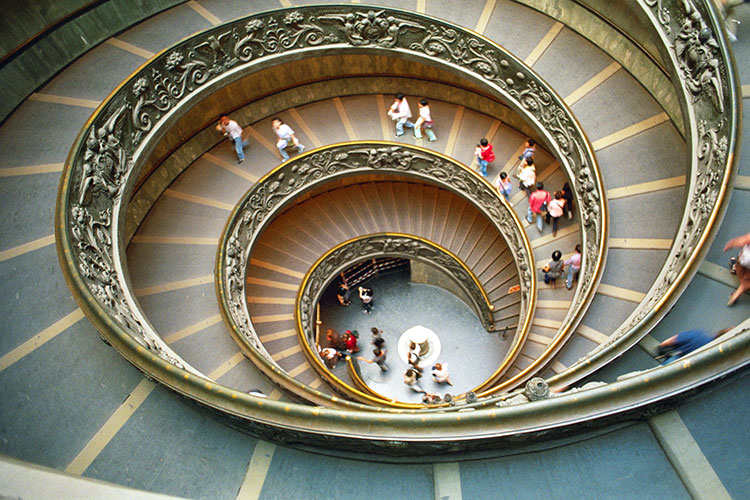
One reason why Italy is so much fun is that it just keeps changing. Here are a few new developments that will be handy for you to know if you’ll be visiting the land of “la dolce vita.”
The Damyang region in Jeolla-nam-do Province, Korea, is where many bamboo items and crafts are created, and many can be seen in the Damyang Bamboo Museum (phone +82 61 1330).
The first floor exhibits 183 antique bamboo items and the tools used to create them. The second has 1,400 modern bamboo products, over 200 of which are foreign-made.
From Seoul, take the bus from Seoul Express Bus Terminal or Dong Seoul Bus Terminal to Gwangiu, then take the bus to Damyang and walk 10 minutes. Open 9 a.m.-6 p.m. 1,000 won (84¢).
Many museums in Berlin do not charge admission or on certain days are free.
The Friedrichswerdersche Kirche-Schinkelmuseum (Bodestraße 1-3, 10178 Berlin) is an annex of the Nationalgalerie, located in a deconsecrated church designed in 1828 by Karl Friedrich Schinkel, who designed many buildings in Berlin. The exhibit contains memorabilia and documents from his many buildings as well as neoclassical portraits and sculptures. Free admission. Open 10-6 Tues.-Sun.
More than 60 of Berlin’s museums and galleries stay open from 6 p.m. to 2 a.m. on the Long Night of the Museums, which takes place on the last Saturday each January and August.
One ticket gives unlimited access to all venues and use of a special shuttle. €15 (near $20) adult, €10 senior, child under 12 free. Tickets at Berlin Infostores, S-Bahn/BVG ticket machines and in front of city hall (by the shuttles) or at www.museumsportal-berlin.de.