Dengue in Paraguay
In the month of January 2008, 150 suspected cases of dengue fever, a mosquito-borne disease, were reported in Paraguay. During 2007 in Paraguay, 27,000 cases were registered, 17 of them fatal.
03
In the month of January 2008, 150 suspected cases of dengue fever, a mosquito-borne disease, were reported in Paraguay. During 2007 in Paraguay, 27,000 cases were registered, 17 of them fatal.
As of Jan. 3, 2008, 148 people had become ill and 37 people had died of Ebola hemorrhagic fever in western Uganda’s Bundibugyo district in an outbreak that may have begun as early as August 2007.
Ebola, a rare, serious viral disease, is spread through direct contact with the blood or other body fluids of infected persons. People who have close contact with a nonhuman primate infected with the virus are also at risk.
Following the murder of four French tourists in Mauritania in December 2007, two suspects were captured in Guinea-Bissau and returned to Mauritania to face trial and one is still at large. Two of the three are suspected to be Islamic extremists allied with al Qaida. An attack on a military base in northern Mauritania two days after the murders left three soldiers dead.
Violence like this is rare in Mauritania, and it is speculated that it was carried out to gain maximum attention by leading to the cancellation of the Lisbon-Dakar 2008 auto rally.
Muslim insurgents have been acting in Thailand’s southern provinces for four years now, creating risks for those traveling overland in Narathiwat, Pattani, Yala and Songkhla provinces. (Coastal resort areas have not been affected.)
They are suspected of killing eight soldiers in an ambush on Jan. 14, 2008, and the next day setting off a motorcycle bomb in a Yala marketplace, wounding 39.
Some elements of the Iranian regime and the population remain hostile to the United States. As a result, American citizens may be subject to harassment or arrest while traveling or residing in Iran.
The Department of State continues to warn dual-national Iranian-American citizens that they may encounter difficulty in departing Iran. Former Muslims who have converted to other religions as well as persons who encourage Muslims to convert are subject to arrest and prosecution.
The State Department advises avoiding travel to eastern Chad and the Chad/Central African Republic border area.
On Oct. 16, 2007, the government of Chad declared a State of Emergency in response to interethnic violence and rebel activity throughout the country, especially in the east. The Chadian national army continues to mobilize and move additional troops to the east and has placed police and military checkpoints in N’Djamena.
In a hopeful move, the government of the Democratic Republic of Congo (DRC) on Jan. 21, 2008, reached an agreement with rebel generals to end hostilities.
They will withdraw troops from some positions and allow the UN to set up a buffer zone. In return for ending the rebellion, the insurgents will be granted amnesty and be integrated into the national army. If the truce holds, it is good news for the over 400,000 people displaced during the last year of civil war.
On Feb. 1, an agreement to stop the violence in Kenya within 14 days was reached after Kofi Annan met with parties of the two political opponents.
Nearly 1,000 people have died in the violence that erupted after the contested results of the December presidential election were announced. Most of the violence and demonstrations have taken place in the western part of the nation, with some incidents in the southern region. Two opposition party legislators were killed in what appeared to be assassinations.
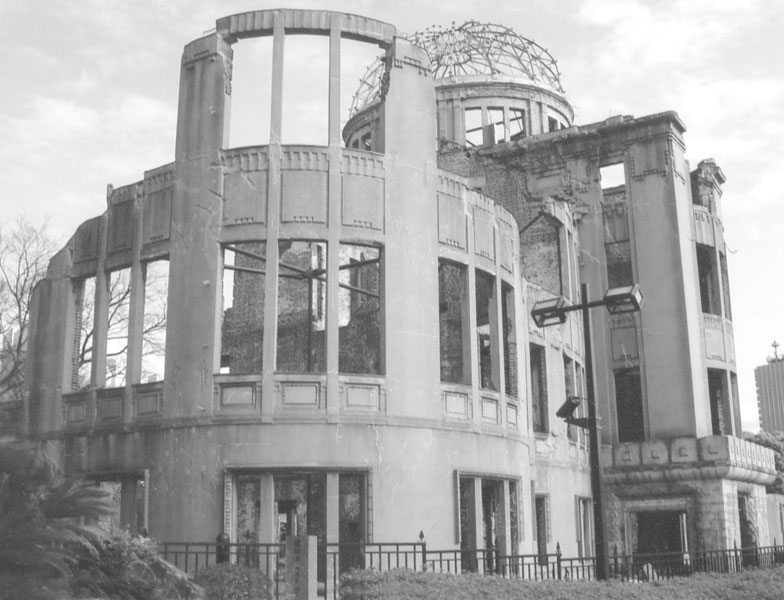
A monument to the devastation wrought by war and the hope for a future of peace, the Hiroshima Peace Memorial (Genbaku Dome), the former Prefecture Exhibit Hall, has been kept in the condition it was left in after the atomic bomb blast of August 6, 1945.
Ninety (!) readers sent in correct answers, and GERARD BROOKER of Bethel, Connecticut, won the drawing.