Central Asia and the historic Silk Road were a mystery to us. We knew that historically, trader caravans used camels to carry goods between China and Europe on the Silk Road and travelers, like Marco Polo, described beautiful Islamic cities along the route. But under Czarist Russia and the Soviets, Central Asia was closed off to most outsiders. With the fall of the USSR, and the independence of these former socialist republics, visitation reopened, and we wanted to see if reality matched our imaginations.
We wished to visit all five of the Silk Road “Stans”: Kazakhstan, Kyrgyzstan, Uzbekistan, Tajikistan, and Turkmenistan. After reviewing the itineraries of several tour companies, we chose Road Scholar’s (roadscholar.org) April-May 2026 On the Silk Road in Central Asia small group tour because it included Turkmenistan. Many other companies omit it because of the entrance challenge. The other four Stans did not require a visa for us (Uzbekistan waives its visa for Americans 55 and older; younger travelers need an e-visa), but Turkmenistan was another story. We had to apply online for a letter of invitation, which included explaining our past employment. After responding to a few follow-up questions from the Turkmenistan government, we received our invitations to visit. The tour cost $6,999 per person for 20 days and included 45 meals but not airfare.
As it turned out, the Road Scholar tour was operated by MIR (mircorp.com), a Seattle-based company with a long history in Asia and a regional office in Tashkent, Uzbekistan. Our guide Timur grew up in Khiva, Uzbekistan, and was fluent in English, Russian, and Turkish as well as Uzbek. We also had different local guides depending on the country and city. Our itinerary was very busy with sightseeing, activities, meals, and long bus rides plus one flight within Turkmenistan. In fact, some travelers in our group noted in their feedback to Road Scholar that there was little down time and as a result all of us received a short apology and a $500 credit.
Comparing the Stans
After traveling through the region, we observed a few common threads running through all five countries. Because all were once part of the Soviet Union, Russian was still the lingua franca although we found many people in the hospitality business also spoke English.
Tourist buses were not allowed to cross borders. Therefore, at each border, we had to grab our own luggage, clear exit immigration and customs, drag our belongings across a neutral zone, and clear entry procedures on the other side. Some governments were more efficient at border crossings than others, and we never knew how long it would take. A different tour bus would then meet us with a new local guide. All the countries had their own currencies, but we found most large shops took credit cards, as did some restaurants. In Kazakhstan, we were even able to use Apple Pay at a grocery store. Money exchanges and banks would only accept pristine US dollars for exchange. Large cities had ATMs, which turned out to be a more reliable way to get local currency.
We learned during the trip that the Stans shared many common cultural, historical, and religious themes. Most residents were Sunni Muslims, and they shared a similar long history: ancient fortified cities, the Silk Road, Islamic expansion, the Mongol invasion, Czarist colonialism, and Soviet oppression. Yet their traditions survived in many ways. For example, bakers made all kinds of round bread with intricate designs, and Soviet-built covered markets had tables full of bread for sale. The region’s one famous common dish is plov, a rice pilaf meal with meat, vegetables, and lots of sheep fat. From our digestive experience, it is best not to eat too much!
Each country also offered memorable places and experiences like falconry, traditional music, cultural crafts, and massive walled cities.
Kazakhstan and Kyrgyzstan
Falconry is a historic tradition in Kazakhstan, and we were privileged to visit the Sunkar Falcon Farm just outside of Almaty. One male and one female trainer dressed in traditional Kazakh leathers demonstrated the skills of the birds, which included not only falcons but other raptors, an owl, and even a vulture. No hunting of live animals took place; instead, a trainer would drag an animal pelt across the arena on a long rope, and the bird would dive upon it. Afterwards, we were treated to a traditional Kazakh nomadic lunch in a giant yurt with entertainment by folk musicians. We saw how actively Kazakhstan was reviving its musical traditions when we visited the Museum of Kazakh Folk Musical Instruments (e-museum.kz). In the museum’s concert hall, an accomplished student gave our group a private recital using Kazakh folk instruments and afterwards answered our questions.
While in neighboring Kyrgyzstan, we attended a training session of horsemen practicing ulak tartysh, a sport that resembles polo, except the object is to carry a headless goat carcass to the opposing team’s goal. Players wrestled each other on horseback while fighting for the goat, and it was rough at times. When we first heard about the sport, it sounded gruesome, but it was not as stomach-turning as we expected. One team captain told us that Kyrgyzstan hosts a worldwide ulak tartysh competition as part of the World Nomad Games, and a team from Wyoming represented the United States.
Tajikistan and Uzbekistan
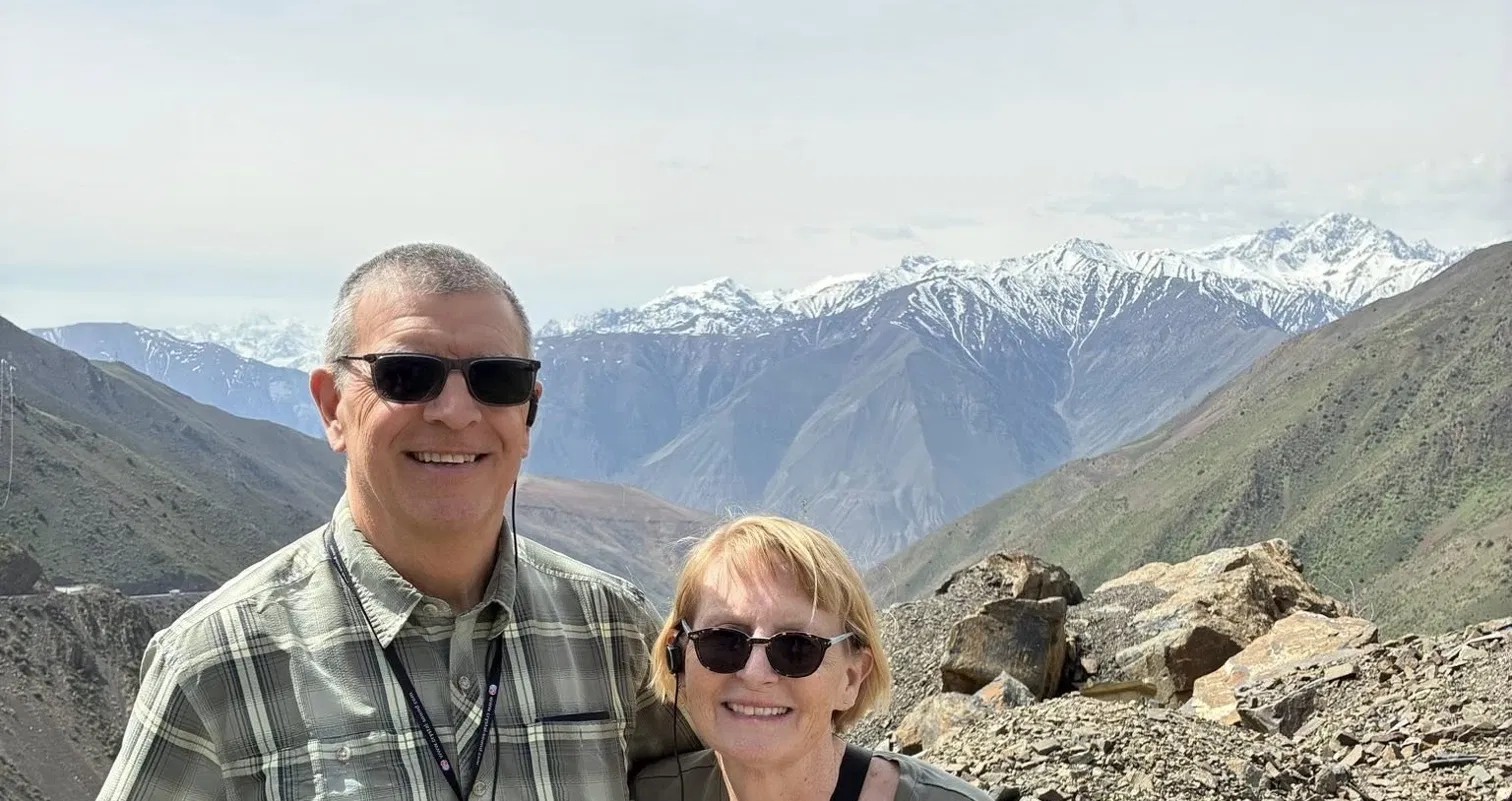
Tajikistan is a mountainous country, and we drove by bus through the awe-inspiring snowcapped Fann mountain range. The highway clung to the mountainsides above precipitous drops. At one point, we stopped at an overlook thousands of feet above the valley floor for photographs of the snow-covered peaks. The scenery was breathtakingly beautiful.
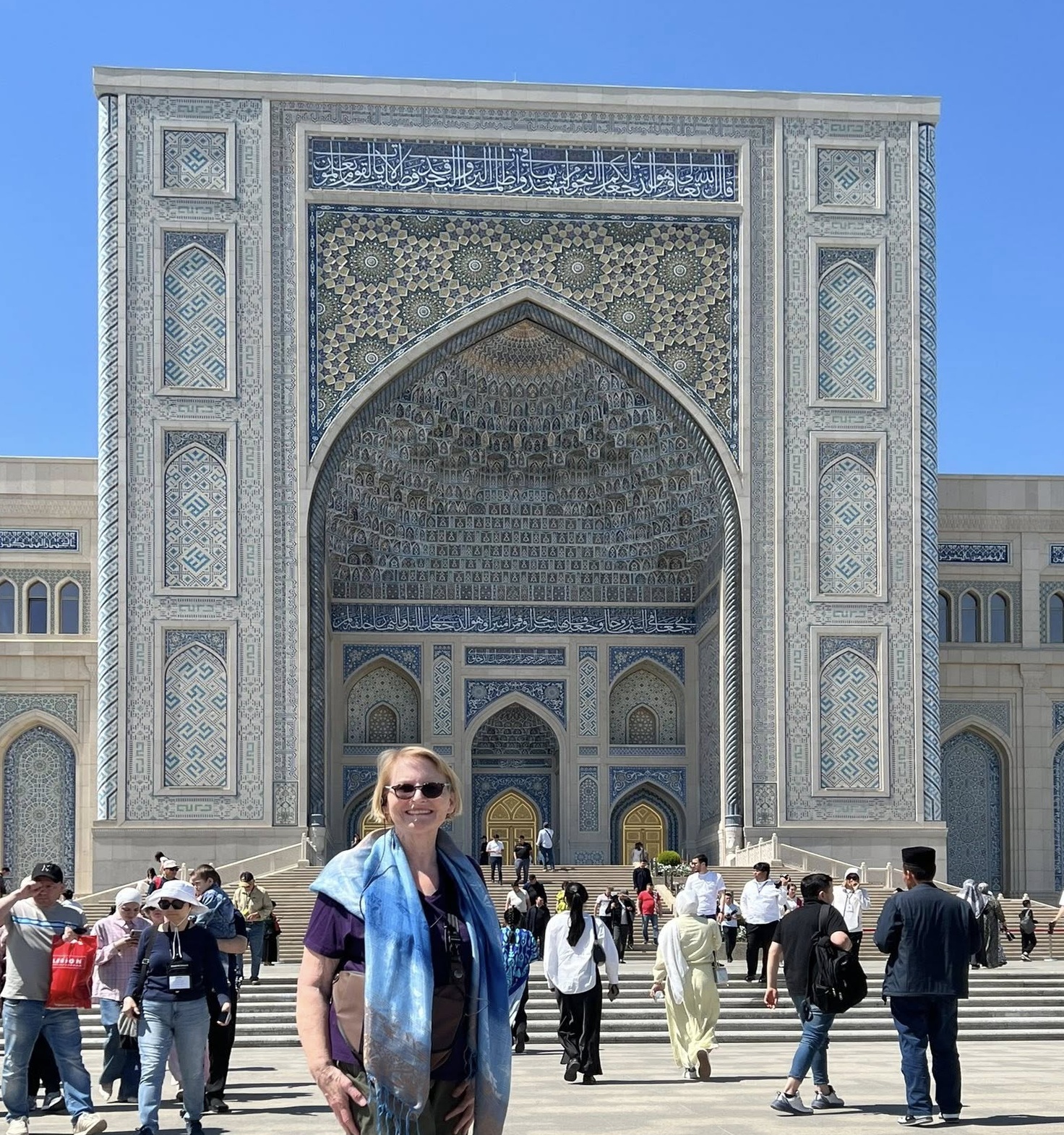
We spent many days in Uzbekistan, visiting Tashkent, Samarkand, Bukhara, and Khiva. All these historic cities were living museums. In Tashkent, we were Road Scholar’s first visitors to the newly opened Center of Islamic Civilization (iccu.uz), a marvel of interactive technology. The center teaches Islamic history and religion, and its gem is the famous seventh-century Uthman Quran. One of the oldest in existence, it is housed in a hall with its own sound and light show. Easily, an entire day could be spent at the center. Later that day, we toured the State Museum of Applied Art and Handicrafts (artmuseum.uz) and stumbled upon a fun experience. We wandered away from the group and found a tent in the museum’s courtyard where we learned to make marbled paper.
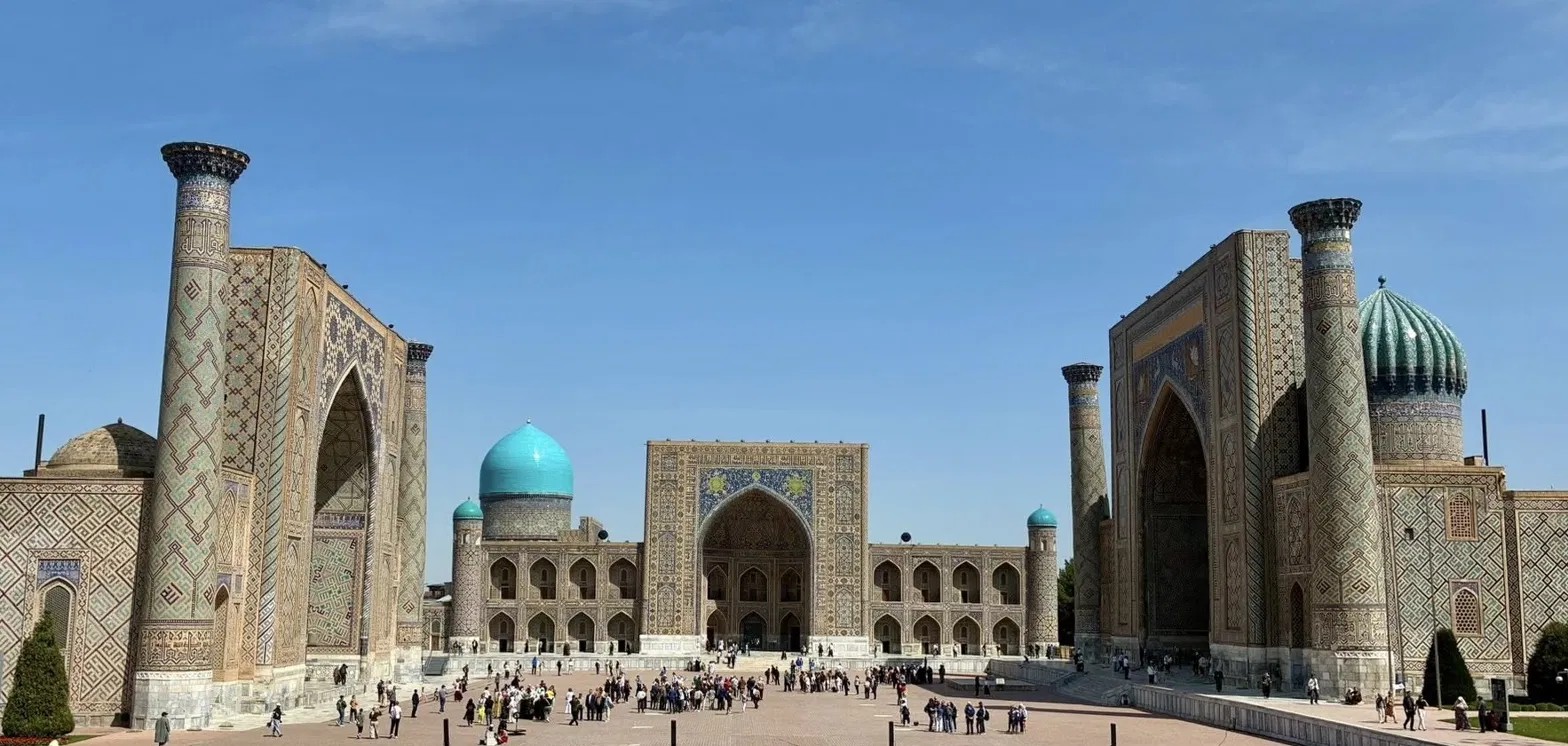
Samarkand was once one of the most important Silk Road cities and a hub of Islamic learning. Registan Square, in the heart of the city, contained ancient madrasas (Islamic schools) that have been turned into museums. Vendors gave demonstrations on calligraphy, tile making, and musical instrument construction using techniques from the 1400s. In the evening, we enjoyed a free sound-and-light show here explaining Samarkand’s history.
Bukhara is another Silk Road city with historic caravanserais, museums, and many tourist shops. We stayed in a boutique hotel that used to be a Jewish merchant’s house. We toured the massive Ark of Bukhara, the fortress where the rulers of the Bukhara Emirate lived for centuries before the Bolsheviks destroyed most of it in the 1920s. Restoration efforts have made great progress in bringing it back to life. Khiva also stood out as a beautifully restored fortified city. Timur invited us to his home to meet his family and share snacks. All these cities were busy with foreign tourists, many of them from Russia.
Turkmenistan
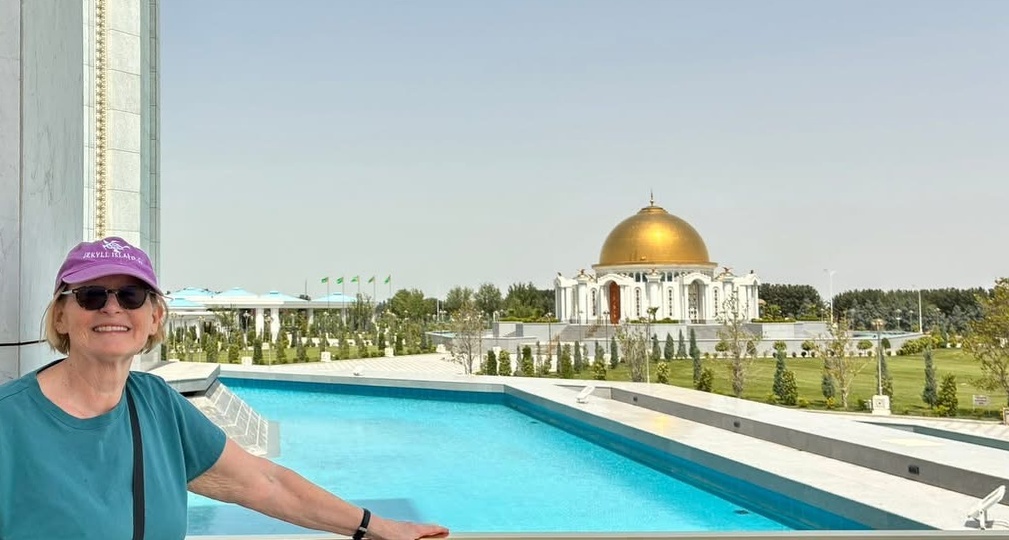
Turkmenistan was a surprise, and different from the other Stans. We crossed the border near Khiva and flew to the capital, Ashgabat. Arriving at night, we were treated to a lighted fountain show at the airport and observed extravagantly lit buildings all the way to our hotel. The city had many big monuments and golden statues and reminded us of a cross between Disney World and Las Vegas.
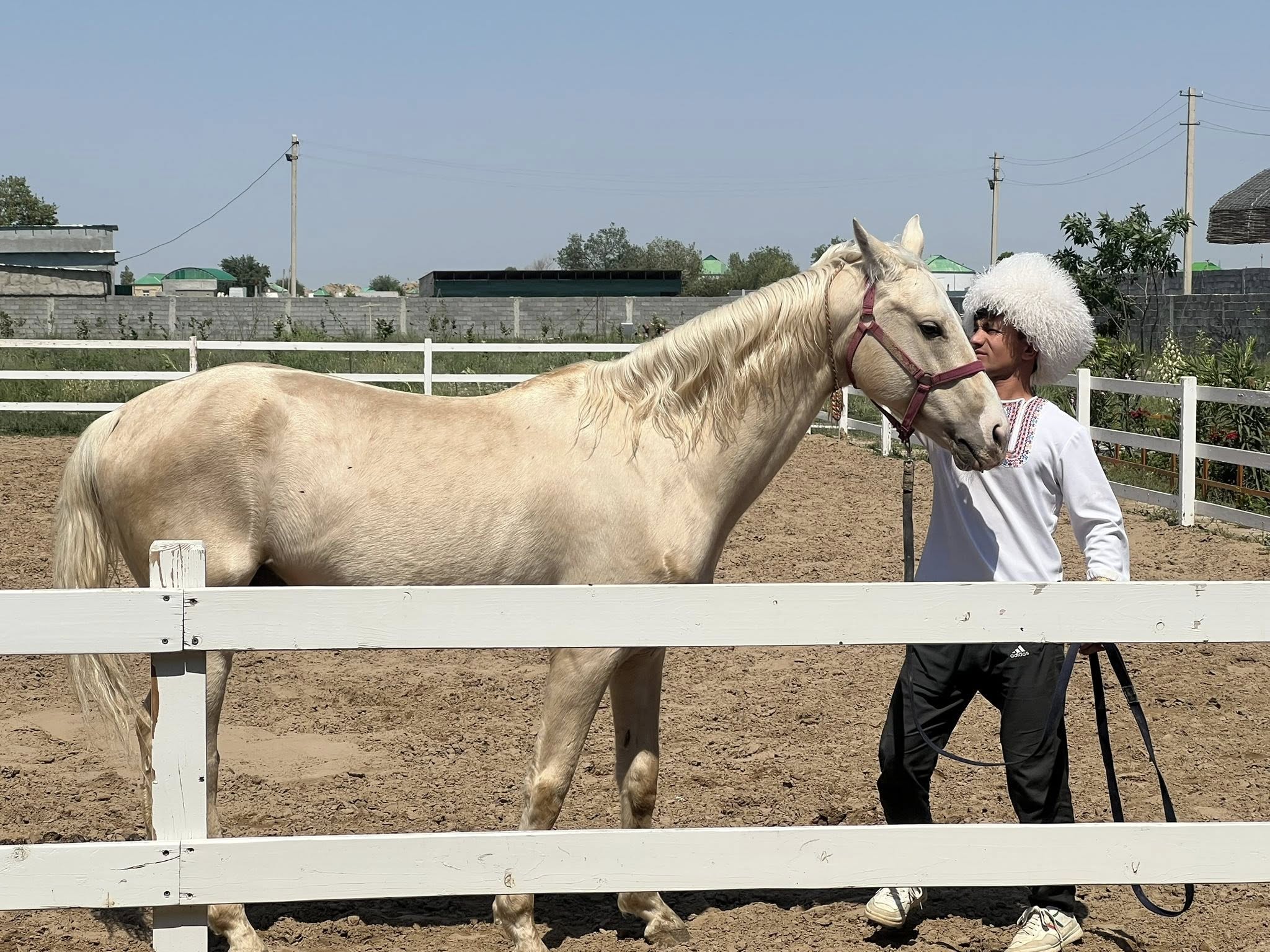
During the day, Ashgabat stunned as a modern urban oasis with all the buildings either made of white marble or painted white to look like marble. Even the vehicles were white by law. Possibly the most impressive architectural complex was the Turkmenbashi Ruhy Mosque and the adjacent mausoleum of the country’s first president. We were surprised to find this big, beautiful complex empty. Outside of the city, we visited an Akhal-Teke horse farm and learned about this ancient, athletic breed.
This trip more than satisfied our curiosity about Central Asia. We found the countries exotic, historic, full of wonderful people, and ready for travelers with good tourism infrastructure.