After 65 trips to Europe over the past 71 years, in September 2025 I decided to remain on this continent and visited the Canadian Maritime Provinces of Nova Scotia, New Brunswick, and Prince Edward Island with Grand Circle Travel (GCT.com). I have traveled with them 19 times and wholeheartedly recommend them. I paid $4,295 for 13 days and would rate the level of difficulty as one out of five. I had a thoroughly enjoyable adventure. Sunny skies dotted with fluffy white clouds and daily high temperatures ranging from 50 to 75 degrees provided perfect weather. The coastline and tidy clapboard houses reminded me of New England except for the numerous Canadian flags. I enjoyed the company of my 38 fellow travelers and found the accommodations comfortable and centrally located.
My biggest surprise, however, was discovering my ignorance about a historical event, a historical figure, and a natural phenomenon. I learned about the first during my preparations for the trip when I read “The Great Halifax Explosion” by John U. Bacon. I was appalled that, as a history major, I knew nothing about the most devastating explosion before the atom bomb. In December 1917, the Norwegian ship SS Imo collided with the French munitions ship SS Mont-Blanc, resulting in an explosion that killed more than 1,700 people and injured 9,000 more. Today Halifax is better known for a different disaster, recovering survivors and bodies after the sinking of the Titanic. Many of the victims are buried in a graveyard laid out to resemble a ship.
The second surprise occurred on Cape Breton Island, where we recovered from our travel and hectic day in Halifax traffic at the restful and serene Silver Dart Lodge (silverdartlodge.com). A visit to the Alexander Graham Bell National Historic Site (parks.canada.ca/lhn-nhs/ns/grahambell) provided fascinating information and exhibits about his numerous inventions like a machine to husk corn and a flying machine, the Silver Dart. I only knew about his invention of the telephone. Bell worked with deaf people, and had directed the Kellers to the Perkins Institute, which found Anne Sullivan for Helen Keller; Keller dedicated her autobiography to Bell, and he selected the epitaph “Teacher of the Deaf” for his gravestone.
Walking on the Seabed
My third surprise came at Hopewell Rocks in New Brunswick. We walked on the seabed under 40-to 70-foot formations carved by the Bay of Fundy. The highest tides in the world are here, rising about 50 feet in six hours. I had never heard of it. Later we were mesmerized watching the powerful tide push the large Saint John River upstream at Reversing Falls.
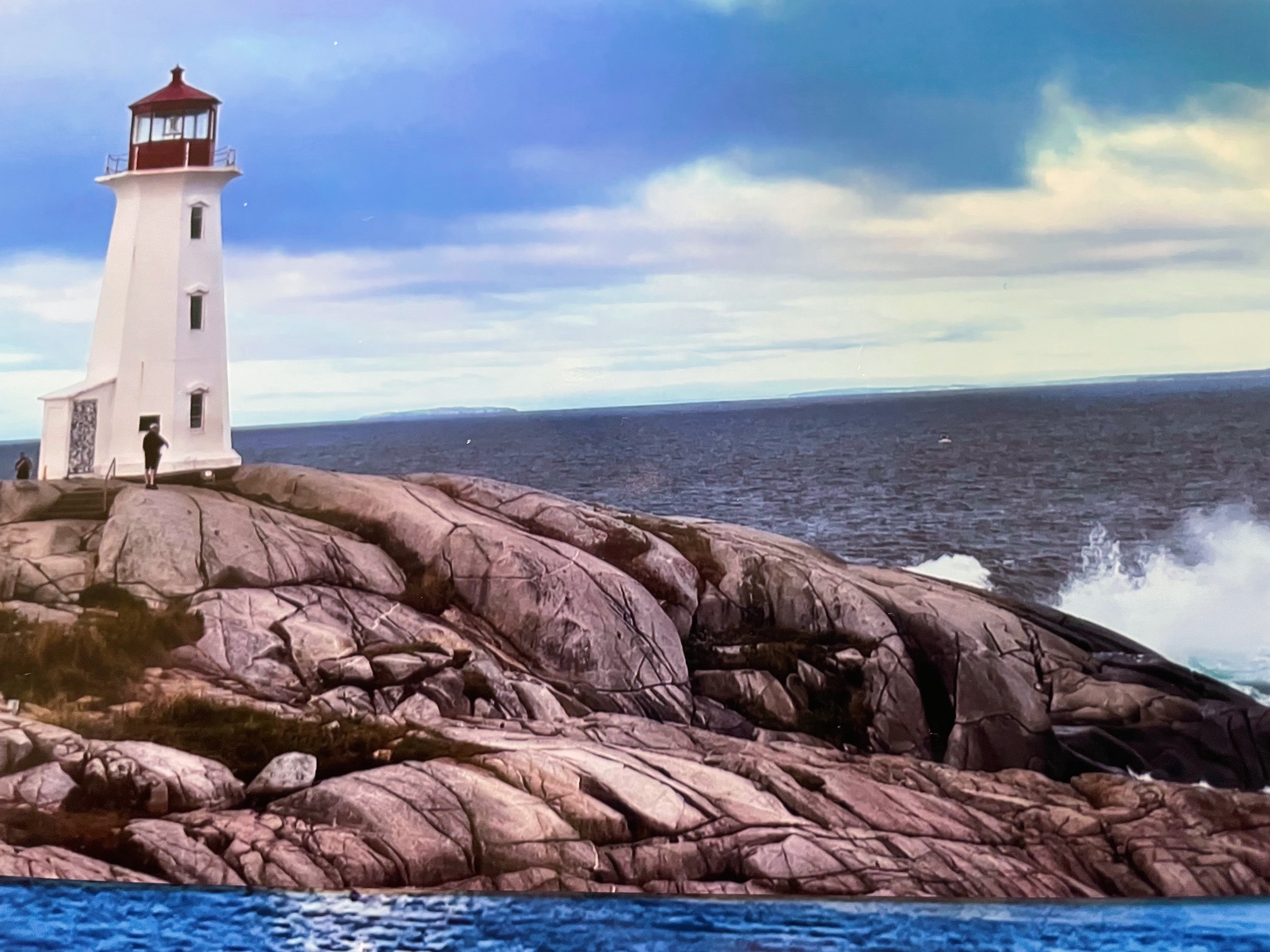
In addition to correcting my ignorance in these three areas, traveling 1,630 miles on the bus provided attractive views of the sea and forests, scenic villages, and numerous red-and-white lighthouses. We were entertained by dolphins and seals on the ferry ride from New Brunswick to Prince Edward Island; porpoises and a breaching minke whale captured our attention on the return from a visit to the Roosevelt Cottage on Campobello Island.
In this day of steeply rising plane fares, such an enjoyable and educational trip on our own continent seemed a bargain.