It is indeed an exciting time with International Travel News coming back to life after a four-year hiatus, under new ownership and editorial management. It is an honor, as a former longtime ITN columnist, to be a part of this important relaunch adventure.
In my Far Horizons column, I will continue to address topics of interest to international travelers, as well as report on my own international explorations.
Sometimes, when I write about issues facing international travelers, the topic may relate to only a portion of ITN readers. This is one of those occasions. My primary focus in this column is on seniors extending their personal travel boundaries, especially as regards undertaking adventure travel.
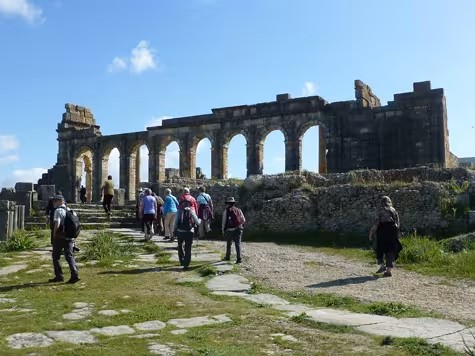
The Age of Senior Adventure Travel
Today, we see increasing numbers of travelers into their 80s participating in adventure travel group tours. Companies like Toronto-based ElderTreks (eldertreks.com) and Boston-based Overseas Adventure Travel (OAT, oattravel.com) cater specifically to travelers age 50 and older, offering a wide range of small-group, adventure-oriented itineraries, with a maximum of 16 guests.
Both companies provide an activity rating from one to five for each itinerary, along with a description of the physical challenges the tour presents. This is very helpful for self-assessment and often serves as the catalyst for important questions related to an individual traveler’s situation. There are numerous other senior adventure tour operators that provide various levels of difficulty ratings for their programs, and in my opinion, all should do so.
Length-of-Tour Considerations
Since the Industrial Age, American workers have generally received less vacation time each year than their peers in Canada, Australia, New Zealand, Britain, and almost all European nations. Less vacation time has resulted in American travelers historically taking shorter vacations during their working lives. This travel habit often carries over into retirement.
In the past, and still today, many American tour companies have been reluctant to offer group-tour itineraries longer than 17 or 18 days, with the majority of offerings being 14 days or less. What is often considered a long tour for Americans generally is not viewed as such by travelers from the nations listed above.
Some tour operators such as OAT are offering more itineraries of 16 to 20 days than in the past. Half of ElderTreks travelers are Canadians, who are accustomed to longer vacations. ElderTreks today offers many in-depth itineraries of 21 to 30 days, with itinerary inclusions that are not possible on shorter tours.
For more than two decades before retiring in 2022, my tour company, ASI Tours, operated long-haul, 26-day group tours to Australia and Southern Africa. I can attest, from leading the majority of these long group tours, that such in-depth programs tend to attract a very high quality of flexible senior travelers. Our groups tended to meld into one big, happy family by the end of the tour.
Always keep in mind that when evaluating any senior adventure travel program, you have the opportunity to engage in direct, all-cards-on-the-table communication with the tour operator before committing. This can help answer and clarify any questions or concerns and help ensure that you make good trip choices.
“Challenge” Is Not a Dirty Word
In a past discussion with ElderTreks President Gary Murtagh regarding travelers expanding personal travel limits, he offered the following insights:
“As a tour operator dealing with age-50-plus travelers for three decades, one of the most important and challenging aspects of what we do is to qualify people to get on the right trip, not only in terms of their ability but also their desire.”
“Over the years, we have found some of our oldest group members to be the most fit, active, and inspirational of travelers. They see life as a challenge that they want to meet head-on. I have also seen the reverse, where people are physically capable of doing something but limitations exist in their own head.”
Some of the ElderTreks hiking-oriented tours with higher a level of difficulty ratings are examples of itineraries that can provide robust physical and/or mental challenges for senior participants.

Don’t Sell Yourself Short
To repeat, “Challenge” is not a dirty word. Identifying, accepting, and overcoming challenges is how we ensure that we continue to grow as human beings at any age. There is no “senior” exception to this truth, and attitude reigns supreme.
If, for example, you are interested in an itinerary that involves a lot more walking or hiking than you are used to, undertake training before the trip by gradually increasing your walking regimen and incorporating other manageable endurance training exercises.
So here is my unavoidable personal challenge to senior travelers who are able:
Expand Your Personal Adventure Travel Boundaries
Reach into your energy reservoir and undertake a travel adventure that will provide you with a true challenge.
We are, for the most part, the beneficiaries of fortunate timing in terms of international travel opportunities. Today, an increasing number of enticing, previously inaccessible areas of the planet are now being explored via small-group adventure tours.
Final Caveats
In assessing personal travel options and limitations, it is necessary for travelers of any age — but especially seniors — to differentiate between courage and overreach when it comes to medical or other travel-limiting issues.
Consult and, if necessary, modify and update your personal travel bucket list. After some honest self-assessment, proceed — not with reckless abandon, but with confident abandon — into the amazing world of adventure travel that beckons. Perhaps we will cross paths on the slopes of Kilimanjaro, the plains of the Serengeti, or somewhere equally alluring.
A broad-spectrum assessment of personal travel bucket-list considerations will be the topic of a future column.